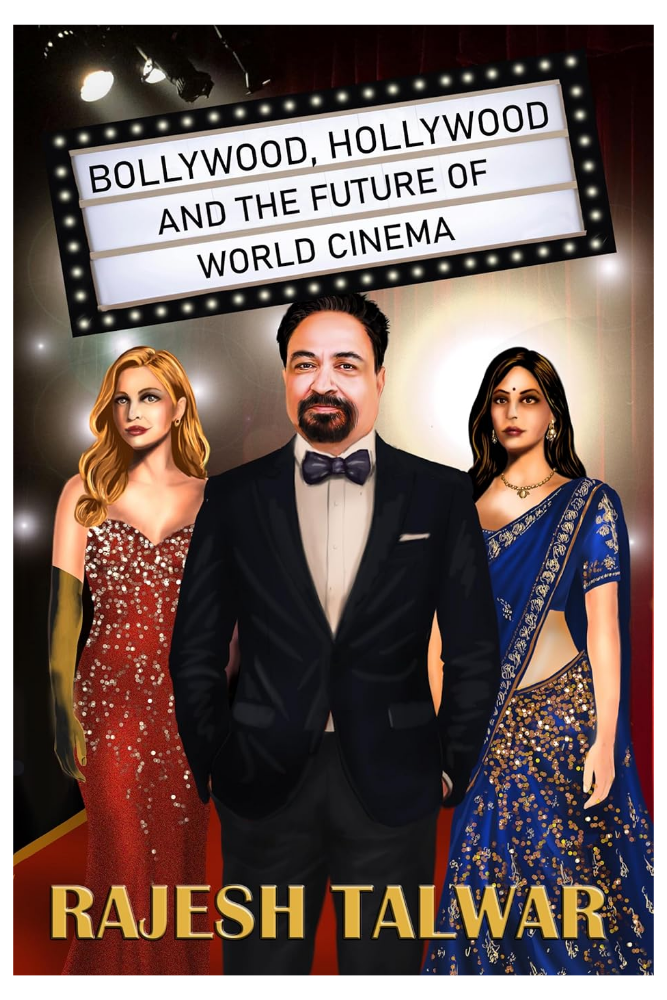

Have you ever sat in a darkened theatre and felt like the scenes were happening right in front of your eyes? This book captures that exact magic while asking a daring question: can Indian cinema finally give Hollywood a run for its money? It is a gripping exploration of how the silver screen acts as a mirror to society, reflecting our twisted imaginations and our greatest aspirations.
Rajesh Talwar’s writing is truly impressive, weaving together personal anecdotes from his time with the UN in Africa and Asia with a deep, professional analysis of film. As an international award-winning author of forty-four books, he brings an incredible breadth of knowledge to the table. The story of the author directing a short film at the London Film Academy felt so surreal, as if I was right there in the audition room with him! He captures the adrenaline rush of filmmaking perfectly, making the technical aspects feel as vivid as a perfect South Indian Action film.
The book is divided into four compelling parts. It begins with a Bollywood miscellany, where we learn why the legendary Amitabh Bachchan owes his second innings to his father’s influence and the polished, elegant Hindi language he inherited. We even get to revisit iconic cinematic utterances like the famous ‘Mona Darling’! Then, it moves into a fascinating comparison of global industries in "Bollywood, Hollywood and the Others." This part covers everything from the Rise of the South and the popularity of stars like Allu Arjun to the reasons why India must partner with Japanese filmmakers for animation to challenge the global dominance of the West.
One of the most gripping sections is Part 3, which details the shocking revelations of the Justice Hema Committee Report. It sent chills down my spine to read about the film mafia and the systemic exploitation of women and junior artists who are sometimes treated worse than slaves on set. The author, being a lawyer, provides a unique and believable perspective on the legal reforms needed to treat everyone with dignity and respect. It is a heart-turning twist to see the dark side of an industry that usually radiates so much glamour.
The final part, "The Future of World Cinema," is where the book really takes off! It explores the impact of new technology like Artificial Intelligence and how it will democratize filmmaking, allowing even a 9-year-old or an indie creator to reach global audiences. I loved the simple and powerful message that while AI can assist, a human heart and a philosophical mind are still required to create a great tune. The book argues that if India raises its standards, it can become a global powerhouse of soft power.
The writing style is descriptive and straightforward, making complex geopolitical and technical topics easy to understand for everyone. It uses simple words to form deep, meaningful sentences that had me hooked from the very first page. I would recommend this book to readers and non-readers alike because it is more than just a book about movies; it’s about culture and national identity. Whether you are a fan of King Khan, a devotee of South Indian action films, or a student of world history, this one of a kind read is for you! (ps: it's great for understanding the future of global entertainment!)
Need Publishing Assistance?