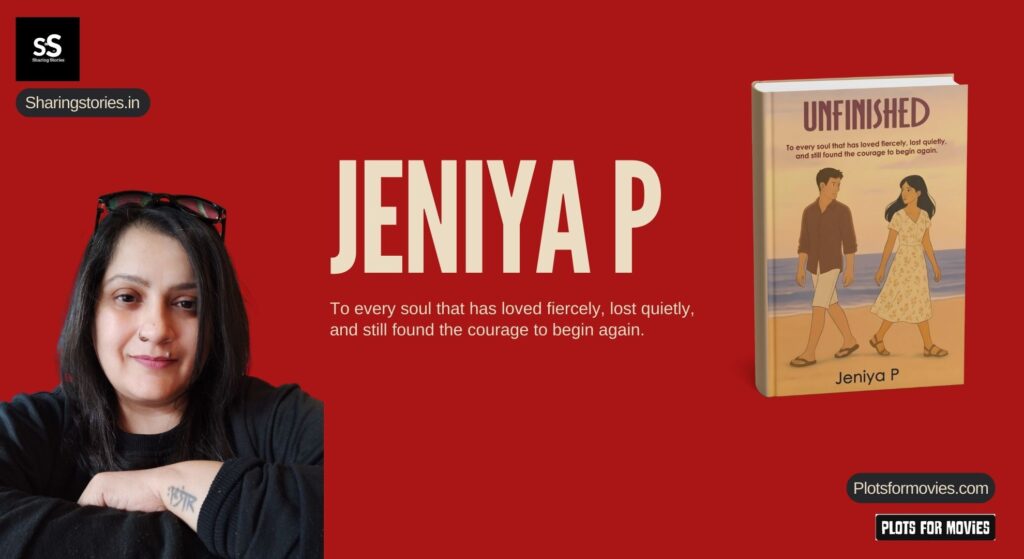
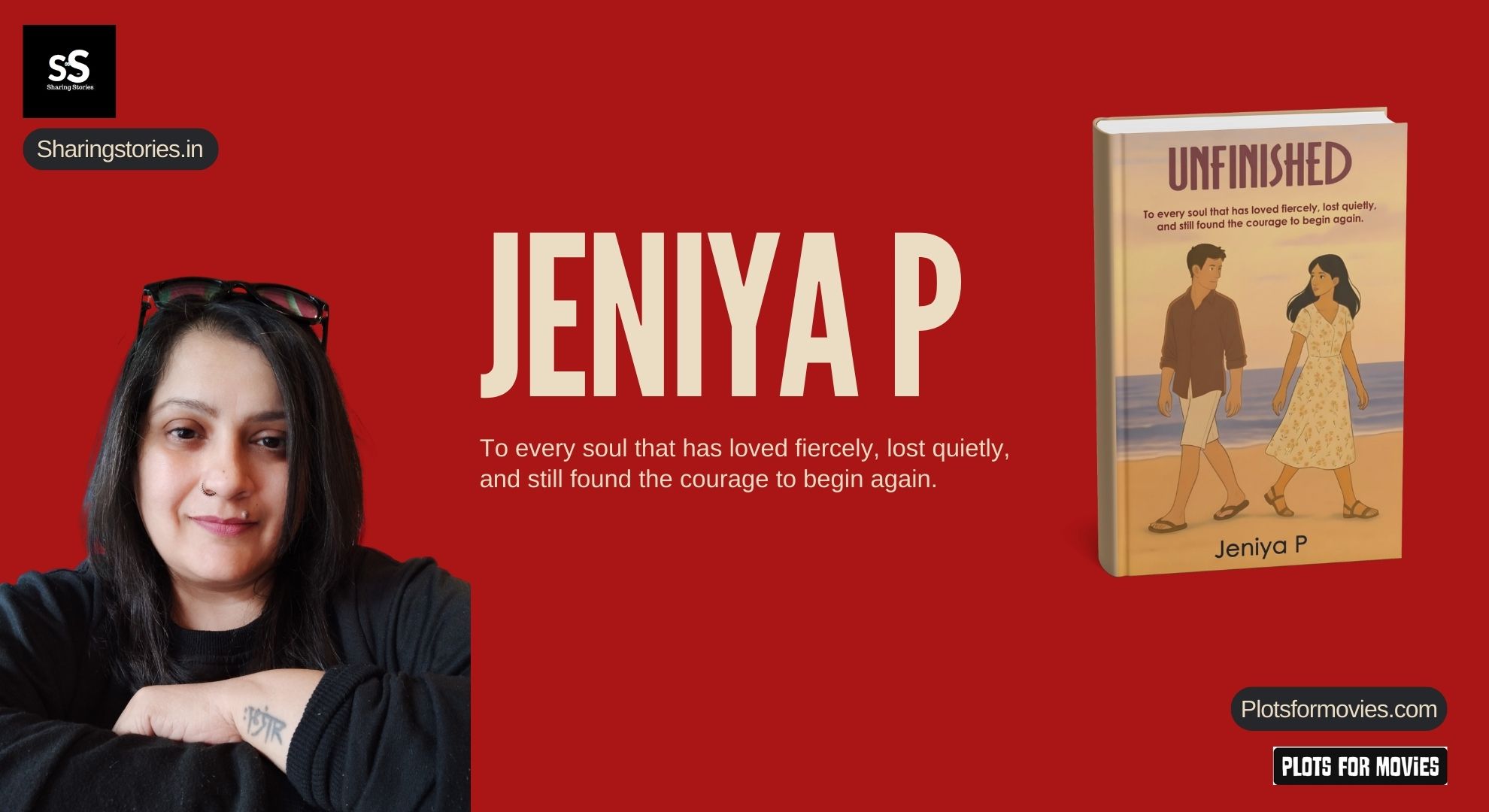
Well, from my own life experiences and from observing people around me, I’ve realised that not all relationships reach a point of fulfillment. Some connections remain incomplete, yet they leave an indelible mark on who we become. They shape our emotions, our choices, and sometimes even our silences. Through Unfinished, I wanted to give voice to those untold stories — the loves that are defined not by possession, but by restraint, longing, and the quiet permanence they hold within us.
I believe marriage can be deeply beautiful when both partners consciously strive, every day, to keep the emotional connection alive. However, the reality is that in many cases, the romance and intensity of the early days slowly give way to routine, and relationships begin to function more on responsibility and transaction than on emotional intimacy.
Like Param and Jiya, many people find themselves emotionally unfulfilled despite being married or in long-term relationships. Loneliness can exist even within companionship, but societal norms often discourage us from acknowledging it or speaking about it honestly.
By placing this story within the boundaries of marriage, I wanted to explore a more complex and uncomfortable truth — that two emotionally starved individuals can, sometimes unintentionally, gravitate towards each other in search of understanding, warmth, and emotional validation. It is not about infidelity as much as it is about human vulnerability, unmet needs, and the quiet spaces where the heart seeks connection.
Get movie-like book trailers & sky rocket your book promotions today! Visit plotsformovies.com
For me, physical needs can vary greatly from person to person and are often driven more by the body and hormones than by the heart. I am not suggesting that physical infidelity can never lead to emotional infidelity — for some, it certainly can. But in many cases, it remains a moment of impulse rather than a deep emotional shift
Emotional fidelity, on the other hand, comes from a much deeper place. It is about loyalty of the heart and mind — about not wanting to hurt your partner, about choosing them every day, about standing by them, protecting their dignity, and never consciously letting them down. It is the silent promise of being emotionally present, honest, and devoted.
This is why emotional betrayal, to me, feels far more profound than physical betrayal. Through fiction, I wanted to explore this invisible yet powerful form of infidelity — the kind that may not leave physical traces, but can quietly alter the core of a relationship and the inner world of the people involved.
Anyone who has spent time in the corporate world knows that the workplace gradually becomes a second home. We spend eight hours or more there every day — sharing pressure, deadlines, lunches, coffee breaks, frustrations, small triumphs, gossip, and even complaints about the boss. Over time, it turns into an entire ecosystem of its own.
Within this ecosystem, you may love certain aspects, feel drained by others, yet you remain deeply intertwined with the people around you. Their moods, struggles, and silences begin to affect you, often more than you realise. By the time one returns home, there is rarely the emotional or physical energy left to seek connection elsewhere.
In such a setting, professional proximity naturally fosters emotional familiarity. It creates spaces for quiet understanding, shared vulnerability, and unspoken support. This is why I believe the corporate workplace plays a powerful role in shaping modern emotional relationships — it is where we spend the best hours of our waking lives, and where bonds, often subtle and unintended, are most likely to form.
The Best 20 Book Marketing Agencies in India (2025): An Author’s Guide
Reality is rarely as romantic as we would like it to be. The characters in Unfinished are caught between genuine emotional attraction and the weight of their moral conditioning, which ultimately defines the kind of people they choose to be. Our sense of right and wrong, shaped by society and personal values, often becomes stronger than our desires.
In real life too, there are countless instances of two people who feel deeply for each other, yet never act on those feelings. They carry that longing in silence because crossing certain boundaries is not acceptable to their conscience or to the moral framework of the world they inhabit.
By choosing realism and loss over a romantic resolution, I wanted to honour those unsaid, unfulfilled emotions. Through fiction, I gave voice to relationships that never get closure, not because the feelings were weak, but because the values holding them back were stronger.
As I mentioned earlier, passion is easier than truth. But what Param and Jiya felt for each other went far beyond momentary desire. It would have been simpler to surrender to passion, but for them it was always a matter of the heart, not just impulse. And when something touches the heart so deeply, it demands honesty, restraint, and dignity.
Their final meeting was therefore not meant to reignite longing, but to offer closure and truth. It was about releasing what had remained unsaid, acknowledging what had existed, and finally letting go without bitterness. In that moment, passion was overruled by peace. They did not need each other anymore — they only needed to understand what they had meant to each other.
For Param and Jiya, the reunion represented emotional liberation and the ability to wish happiness for one another without regret. And for the reader, I wanted it to convey that the success of a relationship is not always defined by togetherness. Sometimes, it lies in acceptance, in honest acknowledgment, and in the grace to let a love remain ‘unfinished’ yet complete in its truth.
We live in a world where people are constantly judged — for how they look, what they wear, where they come from, what they study, or the choices they make. I did not want Unfinished to become yet another space of verdicts.
Every individual is shaped by a different moral conditioning, a different emotional history. The novel does not seek to pass judgment; it seeks to understand. At its core, it is a story about emotions — emotions that exist within all of us, though we respond to them in very different ways.
When it comes to the heart, can we truly define what is absolutely right or absolutely wrong? Are there ever clear answers in matters of love, longing, and restraint? I don’t believe there are. That is why I felt it was important to allow moral ambiguity and let the readers arrive at their own truths, rather than offering them neatly packaged conclusions.
As I have mentioned earlier, Unfinished is meant to offer a different lens to those who have loved deeply yet chosen not to act on it. While it is beautiful when love finds fulfillment and a relationship is allowed to grow, we must also acknowledge the other side of the coin — the stories of desire that remain unexpressed, of emotions that are felt intensely but never spoken aloud.
Through this novel, I wanted readers to realise that such stories are not lesser or incomplete in meaning, even if they are incomplete in form. Sometimes, acceptance is a more powerful closure than union. I hope readers, especially those who carry silent love in their hearts, find the courage to look at their own journeys with compassion and to understand that some stories are meant to remain unfinished — and that, too, can be a beautiful and dignified ending.
Need Publishing Assistance?